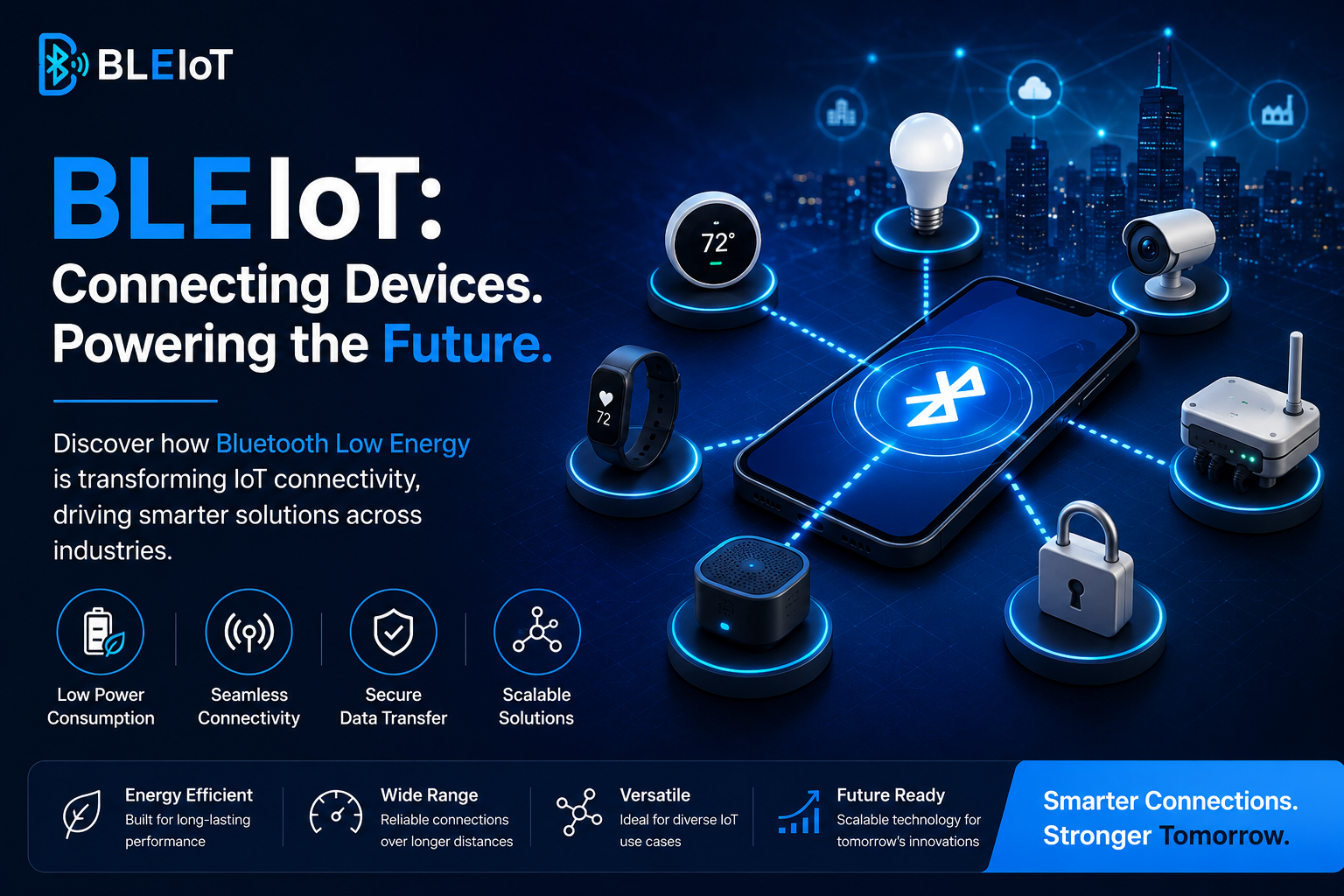
The world is rapidly moving toward intelligent connectivity, where devices communicate seamlessly with each other to improve efficiency, automation, and user experiences. At the center of this transformation stands BLEIoT — a powerful combination of Bluetooth Low Energy (BLE) and the Internet of Things (IoT).
From smart healthcare systems and wearable devices to industrial automation and retail innovation, BLEIoT is revolutionizing how businesses operate and how users interact with technology.
As industries continue to adopt connected ecosystems, BLEIoT has become one of the most reliable, cost-effective, and energy-efficient technologies for building smart applications.
In this comprehensive guide, we’ll explore:
- What BLEIoT is
- How BLEIoT works
- Benefits of BLEIoT solutions
- Real-world industry applications
- Why businesses are investing in BLEIoT development
- Future trends of BLEIoT in 2026 and beyond
What is BLEIoT?
BLEIoT refers to the integration of Bluetooth Low Energy technology with Internet of Things systems to create connected, low-power smart devices capable of wireless communication.
Bluetooth Low Energy (BLE) is a wireless communication protocol designed specifically for devices that require minimal power consumption while maintaining reliable connectivity.
IoT, or the Internet of Things, connects physical devices to the internet, enabling data exchange, remote monitoring, automation, and intelligent decision-making.
When combined, BLEIoT enables devices to:
- Communicate wirelessly
- Consume extremely low power
- Exchange real-time data
- Operate efficiently for long periods
- Support smart automation systems
BLEIoT is widely used in:
- Smart homes
- Healthcare devices
- Fitness wearables
- Retail POS systems
- Industrial automation
- Smart agriculture
- Automotive technology
- Logistics and asset tracking
How BLEIoT Works
BLEIoT devices use Bluetooth Low Energy to establish communication between smart sensors, mobile applications, cloud platforms, and connected systems.
Basic BLEIoT Workflow
1. Smart Device or Sensor
A BLE-enabled device collects data such as temperature, movement, location, heart rate, or inventory status.
2. BLE Communication
The device transmits data wirelessly using BLE protocols.
3. Mobile App or Gateway
A smartphone, tablet, or IoT gateway receives the BLE data.
4. Cloud Integration
The data is sent to cloud servers for storage, analytics, automation, or AI processing.
5. Real-Time Insights
Businesses or users access dashboards, notifications, reports, or automated controls.
This architecture allows BLEIoT systems to provide reliable and real-time connectivity while consuming minimal battery power.
Key Benefits of BLEIoT Technology
1. Ultra-Low Power Consumption
One of the biggest advantages of BLEIoT is its exceptional energy efficiency.
BLE devices can operate for months or even years on a single battery, making them ideal for:
- Wearables
- Sensors
- Smart trackers
- Medical devices
- Remote monitoring systems
This significantly reduces maintenance and operational costs.
2. Fast and Reliable Connectivity
BLEIoT provides stable and quick wireless communication between devices.
This ensures:
- Real-time monitoring
- Instant notifications
- Faster data transfer
- Seamless device pairing
The reliability of BLE makes it perfect for mission-critical IoT environments.
3. Cost-Effective Deployment
BLE hardware modules are affordable and easy to integrate.
Businesses can develop scalable IoT ecosystems without requiring expensive infrastructure.
This makes BLEIoT highly suitable for startups, enterprises, and industrial applications.
4. Enhanced User Experience
BLEIoT solutions create smarter and more personalized user experiences.
Examples include:
- Smart fitness tracking
- Automated retail systems
- Contactless access control
- Real-time health monitoring
- Personalized notifications
Users enjoy convenience, automation, and seamless interaction.
5. Scalability for Enterprise Solutions
BLEIoT systems can easily scale from a few connected devices to thousands of sensors across multiple locations.
This scalability is essential for:
- Smart factories
- Warehouses
- Healthcare networks
- Enterprise asset management
- Retail chains
Top Industry Applications of BLEIoT
Healthcare and Medical Devices
BLEIoT is transforming digital healthcare by enabling continuous patient monitoring and connected medical systems.
Common Healthcare Use Cases
- Heart rate monitors
- Glucose monitoring systems
- Smart thermometers
- Patient tracking
- Remote diagnostics
- Smart hospital systems
BLEIoT improves patient care while reducing healthcare operational costs.
Wearable Technology
Wearable devices heavily rely on BLEIoT for seamless connectivity and long battery life.
Examples
- Smartwatches
- Fitness bands
- Health trackers
- Smart rings
- Sleep monitoring devices
BLE allows these devices to sync data efficiently with mobile applications.
Smart Retail and POS Systems
Retail businesses are increasingly adopting BLEIoT solutions to improve customer engagement and operational efficiency.
Retail BLEIoT Applications
- Smart POS systems
- Indoor navigation
- Beacon marketing
- Inventory tracking
- Contactless payments
- Customer analytics
BLEIoT helps retailers create smarter shopping experiences.
Industrial Automation
Manufacturing industries use BLEIoT for predictive maintenance, equipment monitoring, and automation.
Industrial Benefits
- Reduced downtime
- Equipment tracking
- Real-time alerts
- Worker safety monitoring
- Energy optimization
BLEIoT supports Industry 4.0 transformation.
Smart Home Automation
BLEIoT powers modern smart home ecosystems.
Examples
- Smart locks
- Smart lighting
- Connected thermostats
- Security systems
- Smart appliances
Users can control devices remotely through mobile applications.
Logistics and Asset Tracking
BLEIoT provides efficient tracking solutions for logistics and warehouse management.
Applications
- Fleet tracking
- Package monitoring
- Warehouse automation
- Real-time asset visibility
- Cold chain monitoring
Businesses gain improved operational efficiency and reduced losses.
Why Businesses Are Investing in BLEIoT Solutions
Modern businesses are adopting BLEIoT because it provides measurable operational and financial advantages.
Improved Efficiency
Automation and real-time monitoring help reduce manual tasks and operational delays.
Data-Driven Decision Making
BLEIoT systems generate valuable data insights for better business decisions.
Reduced Operational Costs
Energy-efficient devices and automated workflows minimize expenses.
Enhanced Customer Experience
Smart connectivity improves personalization and customer engagement.
Competitive Advantage
Businesses using BLEIoT stay ahead in innovation and digital transformation.
BLEIoT Development Challenges
Although BLEIoT offers many advantages, businesses should also consider certain challenges.
Security Risks
Connected devices can become vulnerable to cyber threats if not properly secured.
Best Practices
- Device authentication
- Data encryption
- Secure APIs
- Regular firmware updates
Connectivity Limitations
BLE is designed for short-range communication.
Businesses may require additional IoT gateways or hybrid architectures for larger coverage areas.