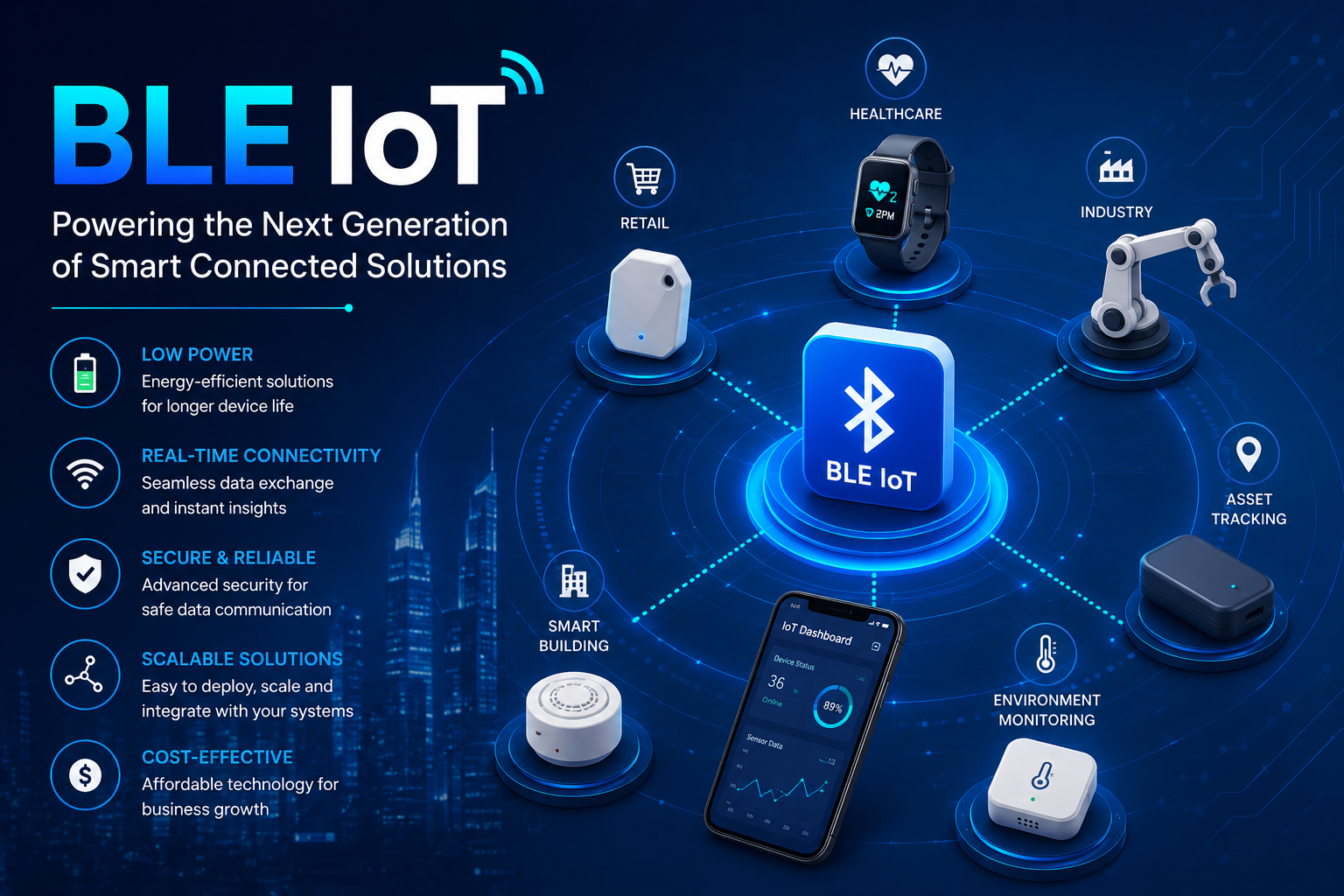
BLE IoT solutions are enabling organizations to build smarter ecosystems across healthcare, retail, logistics, manufacturing, and smart home environments. As businesses continue their digital transformation journey, BLE-powered IoT applications are becoming essential for achieving operational efficiency and real-time visibility.
In this blog, we’ll explore how BLE IoT technology works, its benefits, use cases, and why businesses are investing in BLE IoT development in 2026.
What Is BLE IoT?
BLE IoT refers to the integration of Bluetooth Low Energy technology within Internet of Things ecosystems, allowing connected devices to communicate efficiently while consuming minimal power.
Unlike traditional Bluetooth, BLE is specifically designed for:
- Low-energy communication
- Long battery life
- Fast device discovery
- Secure data transmission
- Continuous monitoring applications
This makes BLE ideal for connected devices that need to operate for extended periods without frequent battery replacement.
Why BLE Is Important for IoT Development
1. Low Power Consumption
The most significant advantage of BLE technology is its ability to operate using minimal energy.
Benefits include:
- Longer battery life
- Reduced maintenance costs
- Improved device reliability
- Sustainable IoT deployments
Many BLE devices can function for years on a single battery.
2. Real-Time Connectivity
BLE enables instant communication between devices, smartphones, sensors, and cloud platforms.
Applications include:
- Patient monitoring
- Asset tracking
- Industrial automation
- Smart retail systems
- Environmental monitoring
Real-time data helps businesses make faster and more informed decisions.
3. Cost-Effective Deployment
BLE hardware is affordable and easy to integrate into IoT solutions.
Advantages include:
- Lower implementation costs
- Faster development cycles
- Scalable infrastructure
- Reduced operational expenses
This makes BLE IoT attractive for businesses of all sizes.
Key Components of a BLE IoT System
BLE Devices
These include sensors, beacons, trackers, wearables, and smart equipment that collect and transmit data.
Mobile Applications
Mobile apps act as gateways between BLE devices and cloud platforms.
Cloud Infrastructure
Cloud systems store, process, and analyze data generated by connected devices.
Analytics Dashboard
Businesses use dashboards to monitor performance, generate reports, and gain actionable insights.
Major BLE IoT Use Cases
Smart Healthcare
Healthcare organizations leverage BLE IoT for:
- Remote patient monitoring
- Wearable health devices
- Medical equipment tracking
- Fitness applications
- Emergency alert systems
Healthcare providers gain continuous visibility into patient health metrics.
Retail and Customer Engagement
Retailers use BLE technology for:
- Beacon marketing
- Personalized promotions
- Indoor navigation
- Inventory management
- Smart POS integration
These solutions improve customer experiences and operational efficiency.
Asset Tracking and Logistics
BLE-powered tracking systems help businesses monitor:
- Equipment location
- Warehouse inventory
- Fleet operations
- Shipment tracking
- Resource utilization
Real-time tracking reduces losses and improves supply chain visibility.
Industrial IoT (IIoT)
Manufacturers utilize BLE IoT to:
- Monitor machine performance
- Predict equipment failures
- Improve worker safety
- Track production assets
- Optimize operational workflows
This results in increased productivity and reduced downtime.
Smart Buildings
BLE-enabled smart buildings support:
- Access control
- Energy management
- Occupancy monitoring
- Security systems
- Environmental controls
Organizations can significantly reduce operating costs while improving user comfort.
Benefits of BLE IoT Solutions
Enhanced Operational Efficiency
Automation reduces manual intervention and improves productivity.
Improved Data Accuracy
Connected devices provide real-time, reliable information.
Reduced Costs
Energy-efficient communication lowers maintenance and infrastructure expenses.
Better Customer Experiences
Personalized services and intelligent interactions increase customer satisfaction.
Scalability
BLE ecosystems can easily expand as business needs grow.
Security in BLE IoT Applications
Modern BLE IoT solutions incorporate advanced security measures such as:
- Data encryption
- Device authentication
- Secure pairing
- Access control
- Firmware update protection
These features help safeguard sensitive business and customer data.
Emerging BLE IoT Trends in 2026
AI-Driven IoT Analytics
Artificial Intelligence is helping businesses derive predictive insights from BLE-generated data.
Edge Computing
Processing data closer to devices improves performance and reduces latency.
Digital Twins
BLE sensors support digital twin technology for real-time asset simulation and monitoring.
Smart Cities
Municipalities are using BLE IoT for traffic management, public safety, and infrastructure monitoring.
Advanced Indoor Positioning
BLE beacons are delivering highly accurate indoor navigation and location-based services.
Why Businesses Need Professional BLE IoT Development
Developing a robust BLE IoT ecosystem requires expertise in:
- BLE communication protocols
- Embedded systems
- Mobile app development
- Cloud integration
- Security architecture
- IoT device management
Professional BLE IoT developers ensure scalable, secure, and future-ready solutions.
Conclusion
BLE IoT technology is transforming how organizations connect devices, collect data, and automate operations. Its low power consumption, real-time communication capabilities, and affordability make it one of the most effective technologies for modern IoT applications.
Whether you’re building healthcare solutions, smart retail platforms, industrial monitoring systems, or asset tracking applications, BLE IoT can help drive innovation and improve business outcomes.
As the connected world continues to evolve, businesses that invest in BLE IoT development today will be better positioned to compete in the digital economy of tomorrow.
Keywords
BLE IoT, Bluetooth Low Energy IoT, BLE Development Services, IoT Application Development, BLE App Development, Smart Devices, Connected Solutions, Industrial IoT, Healthcare IoT, Asset Tracking Solutions, BLE Software Development, IoT Connectivity Solutions.